
Jinko Solar Panels Price In Pakistan May 24, 2026 (Daily Update)
Jinko solar panels price in pakistan currently range from Rs. 24 to Rs. 42 per watt, with significant price variations across different suppliers and panel types. For business owners and facility managers seeking reliable solar solutions, Jinko represents a Tier 1 certified option available through multiple authorized distributors at varying price points.
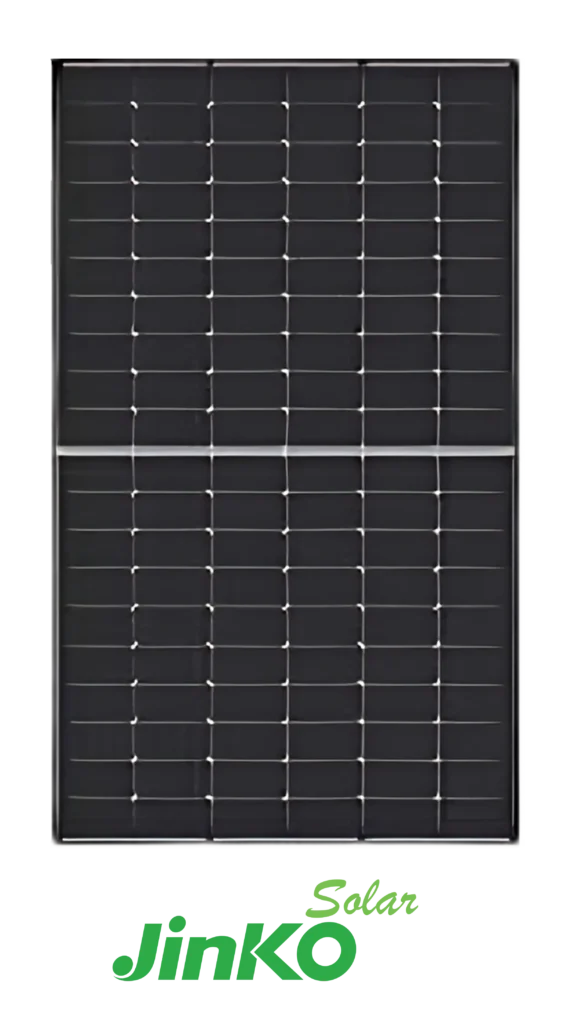
N-Type Solar Panels - Budget Supplier Pricing
| Model & Specifications | Price Per Watt | Total Panel Price | Stock Status | Action |
|---|---|---|---|---|
| Jinko N-Type 585W Mono Single Glass A-Grade | Rs. 29.00 | Rs. 16,965 | In Stock | Get Bulk Quote Today |
| Jinko N-Type 585W Bi-Facial Double Glass | Rs. 29.50 | Rs. 17,257 | In Stock | Get Bulk Quote Today |
| Jinko N-Type 575W Bi-Facial A-Grade Tier 1 | Rs. 28.50 | Rs. 16,387 | In Stock | Get Bulk Quote Today |
| Jinko 555W Single Glass A-Grade Documented | Rs. 29.00 | Rs. 16,095 | In Stock | Get Bulk Quote Today |
| Jinko N-Type 575W A-Grade Documented | Rs. 31.00 | Rs. 17,825 | In Stock | Get Bulk Quote Today |
N-Type Solar Panels - Mid-Range Supplier Pricing
| Model & Specifications | Price Per Watt | Total Panel Price | Stock Status | Action |
|---|---|---|---|---|
| Jinko 615W Bifacial Solar Panel | Rs. 30.70 | Rs. 18,880 | In Stock | Get Bulk Quote Today |
| Jinko 595W N-Type Mono PERC | Rs. 33.00 | Rs. 19,635 | In Stock | Get Bulk Quote Today |
| Jinko 585W N-Type Bifacial | Rs. 29.20 | Rs. 18,135 | In Stock | Get Bulk Quote Today |
| Jinko 560W Mono PERC | Rs. 28.50 | Rs. 15,960 | In Stock | Get Bulk Quote Today |
N-Type Solar Panels - Premium Supplier Pricing
| Model & Specifications | Price Per Watt | Total Panel Price | Stock Status | Action |
|---|---|---|---|---|
| Jinko Tiger Neo 720W (Hot 3 Type) | Rs. 35.00 | Rs. 25,200 | In Stock | Get Bulk Quote Today |
| Jinko 635W (20x Type) A-Grade Tier 1 | Rs. 34.50 | Rs. 21,907 | In Stock | Get Bulk Quote Today |
| Jinko N-Type 585W Monofacial A-Grade | Rs. 33.00 | Rs. 19,305 | In Stock | Get Bulk Quote Today |
| Jinko N-Type 585W Bifacial | Rs. 32.75 | Rs. 19,158 | In Stock | Get Bulk Quote Today |
N-Type Solar Panels - Retail E-Commerce Pricing
| Model & Specifications | Price Per Watt | Total Panel Price | Stock Status | Action |
|---|---|---|---|---|
| Jinko 585W N-Type Bi-Facial | Rs. 34.00 | Rs. 19,890 | Available | Get Bulk Quote Today |
| Jinko 580W N-Type Bi-Facial | Rs. 38.00 | Rs. 22,040 | Available | Get Bulk Quote Today |
| Jinko 580W N-Type Mono PERC | Rs. 38.00 | Rs. 22,040 | Available | Get Bulk Quote Today |
| Jinko 570W N-Type Bi-Facial | Rs. 38.00 | Rs. 21,660 | Available | Get Bulk Quote Today |
P-Type Solar Panels - Limited Availability
| Model & Specifications | Price Per Watt | Total Panel Price | Stock Status | Action |
|---|---|---|---|---|
| Jinko P-Type 555W Monofacial Tier 1 | Rs. 25.00 | Rs. 13,875 | In Stock | Get Bulk Quote Today |
| Jinko P-Type 540W Bi-Facial Tier 1 | Rs. 24.00 | Rs. 12,960 | In Stock | Get Bulk Quote Today |
| Jinko 555W Tier 1 | Rs. 27.00 | Rs. 15,000 | In Stock | Get Bulk Quote Today |
| Jinko 555W Mono PERC | Rs. 38.00 | Rs. 21,090 | Available | Get Bulk Quote Today |
| Jinko 545W Mono Crystalline | Rs. 38.00 | Rs. 20,710 | Available | Get Bulk Quote Today |
| Jinko 520W Mono PERC Half Cut | Rs. 38.00 | Rs. 19,760 | Available | Get Bulk Quote Today |
Understanding Price Variations
The 75% price differential between suppliers (Rs. 24-42/watt) reflects several business model differences:
- Budget suppliers (Rs. 24-31/watt): Wholesale-focused, minimal services, bulk orders preferred
- Mid-range suppliers (Rs. 28-33/watt): Balance of price and service, online ordering available
- Premium retailers (Rs. 34-42/watt): Full-service offerings, nationwide delivery, installation support, consumer protection
Therefore, businesses should evaluate total value beyond per-watt pricing, including delivery, installation support, warranty assistance, and technical consultation services.
N-Type vs P-Type Technology Comparison
Understanding the fundamental technology differences between N-type and P-type panels enables informed purchasing decisions aligned with long-term business objectives. Specifically, these variations affect system performance, maintenance requirements, and total ownership costs over the 25-year operational lifetime.
N-type solar panels employ phosphorus as the primary dopant in silicon wafers, creating electrons as majority charge carriers. In contrast, P-type panels use boron doping, which establishes holes as the dominant charge carriers. This fundamental difference translates to measurable performance advantages for N-type technology, particularly regarding degradation resistance and temperature coefficients. Additionally, N-type cells demonstrate superior immunity to light-induced degradation (LID), a common issue affecting P-type panels during initial operation. Consequently, most suppliers now prioritize N-type inventory, with P-type models increasingly unavailable.
| Feature | P-Type Panels | N-Type Panels |
|---|---|---|
| Efficiency | 20.5% - 21.5% | 22.0% - 23.0% |
| Year 1 Degradation | 2.5% - 3.0% | < 2.0% |
| Annual Degradation | 0.68% - 0.75% | 0.45% - 0.55% |
| Temperature Coefficient | -0.40%/°C | -0.30%/°C |
| 25-Year Output | 82% - 84% | 88% - 90% |
| Current Market Availability | Limited/Out of Stock | Widely Available |
| Price Range in Pakistan | Rs. 24-38/watt | Rs. 28-42/watt |
| ROI Timeline (Business) | 5.5 - 6.5 years | 5.0 - 6.0 years |
For businesses planning 25-year solar installations, N-type panels deliver approximately 6-8% more cumulative energy production despite higher upfront costs at some suppliers. Therefore, facility managers prioritizing lifecycle value should seriously consider N-type technology. Furthermore, the reduced degradation rates ensure more predictable long-term energy generation for financial modeling purposes.
Top Jinko Models for Business Applications
Tiger Neo Series (635W-720W)
The flagship Tiger Neo series incorporates cutting-edge TOPCon technology, delivering industry-leading efficiency for commercial applications.
- Wattage range: 635W - 720W
- Technology: N-Type TOPCon with advanced cell architecture
- Efficiency: Up to 23%+
- Price: Rs. 34.50 - Rs. 35.00 per watt
- Total panel price: Rs. 21,907 (635W) to Rs. 25,200 (720W)
- Best for: Large commercial installations (100kW+), industrial facilities, data centers
- Key features: Superior low-light performance, reduced temperature coefficient, 30-year warranty potential
- Availability: In stock at premium suppliers
High-Wattage N-Type Series (585W-615W)
This range represents the sweet spot for commercial installations, balancing performance with competitive pricing across multiple suppliers.
- Wattage range: 575W - 615W
- Technology: N-Type Mono PERC, Bifacial options available
- Price range: Rs. 28.50 - Rs. 33.00 per watt depending on supplier
- Total panel price: Rs. 16,387 - Rs. 19,635
- Best for: Medium to large commercial rooftop systems (25kW-100kW)
- Key features: Wide availability, multiple supplier options, proven reliability
- Bifacial advantage: 5-25% additional rear-side generation
Mid-Wattage Options (555W-570W)
Budget-friendly options suitable for businesses entering solar energy or expanding existing systems.
- Wattage range: 555W - 570W
- Technology: Mix of P-type and N-type depending on model
- Price range: Rs. 27.00 - Rs. 38.00 per watt
- Total panel price: Rs. 15,000 - Rs. 21,660
- Best for: Small to medium commercial installations, phased expansion projects
- Stock alert: P-type models largely out of stock; N-type available at premium pricing
City-Wise Pricing Analysis
Geographic location influences final panel pricing due to logistics costs, dealer networks, and regional market dynamics. Furthermore, major urban centers generally offer better pricing and wider model availability due to concentrated distributor networks.
| City | Price Per Watt Range | Delivery Timeline | Installation Network |
|---|---|---|---|
| Lahore | Rs. 28 - Rs. 32 | 24-48 hours | Extensive |
| Karachi | Rs. 28 - Rs. 31 | 24-72 hours | Extensive |
| Islamabad | Rs. 32 - Rs. 34 | 48-72 hours | Moderate |
| Rawalpindi | Rs. 32 - Rs. 33.50 | 48-72 hours | Moderate |
| Faisalabad | Rs. 31 - Rs. 33 | 2-4 days | Growing |
Note: These city-specific ranges reflect budget-to-mid-range supplier pricing. Premium retailers like Power House Express maintain consistent nationwide pricing (Rs. 34-42/watt) with nationwide delivery.
Businesses in Lahore and Karachi benefit from competitive pricing due to direct access to wholesale markets and multiple authorized distributors. In contrast, remote locations face higher logistics costs and extended delivery timelines. Additionally, bulk orders exceeding 100 panels often qualify for volume discounts of 3-7%, regardless of location. Therefore, businesses should factor geographic pricing variations into procurement planning and consider consolidating orders to maximize discounts.
A-Grade vs B-Grade Panel Quality
Understanding panel grading systems protects businesses from substandard products and ensures warranty validity. Moreover, this knowledge directly impacts long-term system performance and return on investment calculations.
A-Grade Jinko Panels
A-grade panels represent factory-certified products meeting all quality specifications without defects or performance deviations. Specifically, these panels include:
- Definition: Tier 1 certified, fully documented with serial numbers, zero manufacturing defects
- Price range: Rs. 24 - Rs. 42 per watt depending on supplier and services
- Product warranty: 12 years against manufacturing defects
- Performance warranty: 25-year linear degradation guarantee
- Best for: All commercial and industrial installations requiring long-term reliability
- Verification markers: Authentic serial numbers, official documentation, authorized dealer certificates, manufacturer datasheets
- Market terminology: Listed as "A-Grade Documented" or "Tier 1" in pricing tables
B-Grade Jinko Panels
B-grade panels contain cosmetic imperfections or lack complete documentation, significantly reducing warranty coverage and resale value.
- Definition: Cosmetic flaws (scratches, discoloration), incomplete documentation, refurbished units
- Price range: Typically 15-30% discount from A-grade pricing
- Warranty: Limited or no manufacturer warranty
- Expected lifespan: 10-15 years (vs. 25+ for A-grade)
- Risks for businesses: No performance guarantees, potential output degradation, limited recourse for failures
- When acceptable: Temporary installations, non-critical backup systems, experimental projects
For commercial installations, purchasing B-grade panels represents false economy due to warranty voids and unreliable long-term performance. Therefore, business decision-makers should exclusively specify A-grade panels for mission-critical applications.
Factors Affecting Jinko Solar Panel Prices
Multiple variables influence Jinko panel pricing in Pakistan, creating significant price variations across different suppliers and timeframe. Understanding these factors enables better procurement timing and budget planning for commercial solar projects.
International Market Factors
Global market dynamics directly impact local pricing through several mechanisms:
- USD to PKR exchange rate fluctuations: Currency volatility adds 5-8% price uncertainty quarterly
- Global silicon and raw material costs: Polysilicon prices affect manufacturer costs, with changes typically reflected in Pakistan within 60-90 days
- International shipping and freight charges: Container rates from China fluctuate based on fuel costs and global logistics demand
- Supply chain disruptions: Port congestion, trade restrictions, or manufacturing delays create temporary shortages
- Technology transition: Market shift from P-type to N-type creating P-type stock shortages
Local Market Factors
Domestic market conditions create additional pricing variables specific to Pakistan:
- Supplier business model: Wholesale (Rs. 24-31/watt) vs. retail (Rs. 34-42/watt) creates 40-75% price variation
- Service offerings: Full-service retailers charge premium for installation support, warranties, nationwide delivery
- Documentation standards: A-grade documented panels command premium over undocumented stock
- Seasonal demand patterns: Summer peak demand (April-July) drives prices up 5-10%, while winter installation season (November-February) offers better pricing
- Bulk order discounts: Orders exceeding 100 panels typically receive 3-7% discounts; 500+ panel orders may achieve 8-12% reductions
- Location-based delivery charges: Urban centers incur minimal logistics costs, while remote locations add Rs. 2-5 per watt
Businesses planning large installations should monitor exchange rates and consider forward purchasing during favorable market conditions. Additionally, off-season procurement (October-January) typically yields 8-12% savings compared to peak summer months.
Panel Selection Guide
Strategic panel selection requires systematic analysis of energy requirements, spatial constraints, and financial objectives. Furthermore, this decision-making process determines system performance for the next 25 years, making careful evaluation essential.
Calculate Your Energy Requirements
Accurate load assessment forms the foundation for appropriate system sizing:
- Load assessment methodology: Analyze 12 months of electricity bills to identify average and peak consumption patterns
- Peak demand calculation: Determine maximum simultaneous load to ensure adequate panel and inverter capacity
- Future expansion consideration: Include projected business growth requiring 15-25% additional capacity
- Sample calculation: A business consuming 5,000 kWh monthly needs approximately 15-18 kW installed capacity, requiring 24-30 panels at 585W-720W each
Space and Efficiency Considerations
Physical constraints often dictate optimal panel selection more than budget factors:
- Rooftop area measurement: Each 585W Jinko panel requires approximately 2.6 square meters including spacing
- Higher wattage advantages: 720W Tiger Neo panels require 18% fewer units than 585W panels for equivalent capacity, saving installation labor
- Shadow analysis importance: Even partial shading reduces bifacial panel performance by 15-40%
- Structural load considerations: Verify roof can support 15-18 kg per square meter including mounting hardware
Businesses with limited rooftop space should prioritize high-wattage N-type panels (635W-720W) despite premium pricing, as they maximize energy production per square meter.
Budget vs Supplier Selection
Financial analysis should encompass total ownership costs rather than initial investment alone:
- Budget supplier strategy (Rs. 24-31/watt): Suitable for experienced contractors with in-house technical capability, bulk orders, self-managed installation
- Premium supplier strategy (Rs. 34-42/watt): Suitable for businesses prioritizing turnkey solutions, warranty support, installation assistance, nationwide delivery
- Total cost of ownership: N-type panels generate 6-8% more cumulative energy over 25 years, translating to Rs. 800,000-1,200,000 additional value for 100kW systems
- Service value calculation: Premium suppliers' 30-50% higher pricing may be justified by installation support worth Rs. 20,000-50,000 per kW
Inverter Compatibility
Panel selection must align with inverter specifications to optimize system performance:
- MPPT requirements: Modern inverters support 400-800V DC input; verify panel voltage matches inverter operating range
- String configuration: Commercial three-phase systems typically require 16-22 panels per string for optimal MPPT operation
- Three-phase requirements: Businesses with loads exceeding 15kW require three-phase inverters and balanced string configurations
- Recommended inverter brands: Growatt, Solis, Huawei, and SMA offer proven compatibility with Jinko panels
Consult certified solar engineers to design string configurations optimizing panel output while maintaining inverter efficiency.
Jinko Warranty Structure
Jinko's comprehensive warranty program provides industry-standard coverage:
- Product warranty: 12 years covering manufacturing defects and material failures
- Performance warranty: 25 years with linear degradation guarantee
- Year 1 degradation: Maximum 2% output loss (N-type panels often show <1%)
- Annual degradation: Maximum 0.55% per year (years 2-25)
- Guaranteed output at year 25: Minimum 84.8% of original rated power
- Warranty claim process: Contact authorized dealer, provide serial numbers and documentation, assessment within 10-15 business days
- Authorized service centers: Karachi (2 centers), Lahore (1 center), Islamabad (1 center)
Warranty validity requires purchasing from authorized distributors and maintaining installation records documenting proper system design and certified installation. Additionally, businesses should photograph panel serial numbers and retain all purchase documentation to expedite potential warranty claims.
Frequently Asked Questions
What is the current Jinko solar panel price in Pakistan?
Jinko solar panels range from Rs. 24 to Rs. 42 per watt as of January 12, 2026, depending on supplier, model, and services included. Moreover, budget wholesale suppliers offer Rs. 24-31/watt, while premium full-service retailers charge Rs. 34-42/watt for the same panels with additional support services. Additionally, N-type models are widely available, while P-type models are increasingly out of stock across most suppliers.
Which Jinko model works best for commercial use?
The Jinko Tiger Neo series (635W-720W) delivers optimal performance for large commercial installations requiring maximum efficiency and long-term reliability, priced at Rs. 34.50-35.00 per watt. Alternatively, the 585W-615W N-type bifacial models offer excellent value for businesses balancing performance with budget constraints, available from Rs. 28.50-33.00 per watt depending on supplier. Furthermore, for cost-sensitive projects, the 555W-570W range provides reliable performance starting at Rs. 27.00 per watt where still available.
How do N-Type and P-Type panels differ?
N-type panels use phosphorus-doped silicon achieving 22-23% efficiency with annual degradation below 0.55%, while P-type panels utilize boron doping delivering 20.5-21.5% efficiency with 0.68-0.75% annual degradation. Moreover, N-type panels demonstrate superior temperature performance and generate 6-8% more cumulative energy over 25 years. Additionally, the market is transitioning to N-type technology, with most P-type models now out of stock at major suppliers. Therefore, businesses planning long-term installations should prioritize N-type technology for better availability and performance.
How many panels does a 100kW business system need?
A 100kW system requires approximately 139 panels at 720W each, 158 panels at 635W, 171 panels at 585W, or 179 panels at 560W. However, actual requirements vary based on available rooftop space, desired redundancy, and local climate conditions affecting generation. Consequently, businesses should consult certified solar engineers for precise system sizing and string configuration optimization tailored to their specific electrical infrastructure.
Are Jinko warranties valid in Pakistan?
Yes, authentic Jinko panels purchased from authorized distributors include 12-year product warranty and 25-year performance warranty. Furthermore, warranty claims require original purchase documentation, panel serial numbers, and installation by certified contractors. Additionally, Jinko maintains authorized service centers in Karachi, Lahore, and Islamabad for warranty support and technical assistance. Therefore, purchasing from verified authorized dealers is essential for warranty validity.
Where can I buy authentic Jinko panels?
Verified suppliers include Power House Express (nationwide), solarpanelprices.pk (wholesale), solarpanelpriceinpakistan.pk (premium), and solarpanelsinpakistan.com (mid-range). Moreover, always verify supplier authorization certificates and inspect panel serial numbers before purchase to ensure authenticity and warranty validity. Additionally, compare pricing across multiple suppliers as the same models vary by Rs. 10-14 per watt depending on service offerings and business model.
What payback period should businesses expect?
Commercial solar installations in Pakistan typically achieve payback within 4-6 years based on current electricity tariffs and system performance. Furthermore, businesses consuming electricity during peak hours or operating under commercial/industrial tariff structures often achieve payback in 3-5 years. Additionally, the actual payback period depends on supplier choice, with budget suppliers enabling faster payback through lower initial costs, while premium suppliers offer service value that may justify longer payback timelines. Consequently, avoided electricity cost escalations accelerate real payback timelines beyond initial projections.
Do panel prices include installation costs?
No, quoted panel prices represent equipment costs only. Moreover, installation adds Rs. 20,000-50,000 per kW depending on mounting complexity, location, and system size. Additionally, businesses should budget for inverters (Rs. 80,000-150,000 per 10kW), electrical components, mounting structures, and net metering application fees for complete project costs. Therefore, total system costs typically run 150-200% of panel costs when including all necessary components and labor.
How can I verify panel authenticity?
Authentic Jinko panels feature laser-etched serial numbers on aluminum frames, QR codes linking to manufacturer databases, and holographic authenticity stickers. Furthermore, request official datasheets matching panel specifications, verify supplier authorization certificates, and cross-reference serial numbers through Jinko's official website or customer service. Additionally, suspiciously low pricing (below Rs. 24/watt) or lack of proper documentation often indicates B-grade or counterfeit products that should be avoided. Therefore, verify all documentation before making large commercial purchases.
Why do prices vary so much between suppliers?
The 75% price variation (Rs. 24-42/watt) reflects different business models and service offerings. Specifically, wholesale suppliers (Rs. 24-31/watt) focus on bulk sales with minimal services, while premium retailers (Rs. 34-42/watt) include nationwide delivery, installation support, consumer protection, and warranty assistance. Moreover, service-oriented pricing includes costs for technical consultation, system design, net metering applications, and ongoing support that wholesale suppliers don't provide. Consequently, businesses should evaluate total value including services received rather than comparing per-watt pricing in isolation.